There’s a moment everyone remembers.
The moment you decide: I’m getting a tattoo.
Maybe you’ve been thinking about it for years. Maybe it’s a sudden, exciting decision. Either way, the moment that follows is almost always the same:
“Wait… what do I actually need to know before I do this?”
It’s a fair question. A tattoo is permanent. It’s on your skin for life. And the more you understand before you sit in the chair, the better the entire experience will be—for your skin, your design, and your peace of mind.
This guide is for exactly that moment. Consider it your complete first-tattoo checklist.
Is It Normal to Be Nervous Before Your First Tattoo?
Completely.
Even people who’ve wanted a tattoo for years feel a flutter of nerves right before the needle touches skin. That’s not a red flag—it’s just your body reacting to something new.
👉 Nervous is normal. Unprepared is the actual problem.
The good news? Most of that nervousness comes from not knowing what to expect. Once you understand the process, the fear usually fades into excitement.
Step 1: Choosing Your Design (And Why “Perfect” Is a Trap)
First-timers often get stuck here the longest.
They want something meaningful. Something unique. Something they won’t regret in five years.
Here’s the truth: there’s no such thing as a flawless design choice. There’s only a design that feels right for you, right now.
A few things worth thinking through:
- Meaning vs. aesthetics – Does it need to symbolize something, or do you just love how it looks?
- Size and detail – Smaller, simpler tattoos heal faster and hold up better long-term on certain body parts
- Placement – Where it sits affects pain level, visibility, and healing
- Longevity – Fine linework can blur over decades; bold designs tend to age better
👉 A good tattoo artist won’t just draw what you ask for—they’ll tell you what will actually work on your skin.
Step 2: Picking the Right Tattoo Studio in Ahmedabad
This is, without question, the most important decision in the entire process.
Your design matters. Your placement matters. But none of it matters if the studio isn’t safe.
When evaluating a tattoo studio in Ahmedabad, look for:
- Single-use needles opened in front of you
- Visibly sterilized equipment and clean workstations
- Artists wearing gloves throughout the session
- A portfolio that matches the style you want
- Clear, honest communication—not just sales talk
👉 A studio that takes hygiene seriously will never make you feel like you’re asking too many questions.
If you’re searching for the best tattoo studio in Ahmedabad for your first tattoo, prioritize safety and communication as much as the artwork itself.
Step 3: The Consultation—Don’t Skip This
A lot of first-timers walk in, point at a design, and expect to get inked the same day.
That’s not how a good experience works.
A proper consultation covers:
- Discussing the design and any changes needed
- Talking through placement and sizing
- Explaining the pain level for that specific area
- Walking you through aftercare before the session even starts
👉 If a studio rushes you straight to the chair without this conversation, that’s worth noticing.
At White Snakes Tattoo Studio, the consultation isn’t a formality—it’s where we make sure you’re fully confident before any ink touches your skin.
Step 4: What Actually Happens During the Session
Not knowing what to expect is often the biggest source of anxiety. So let’s remove the mystery.
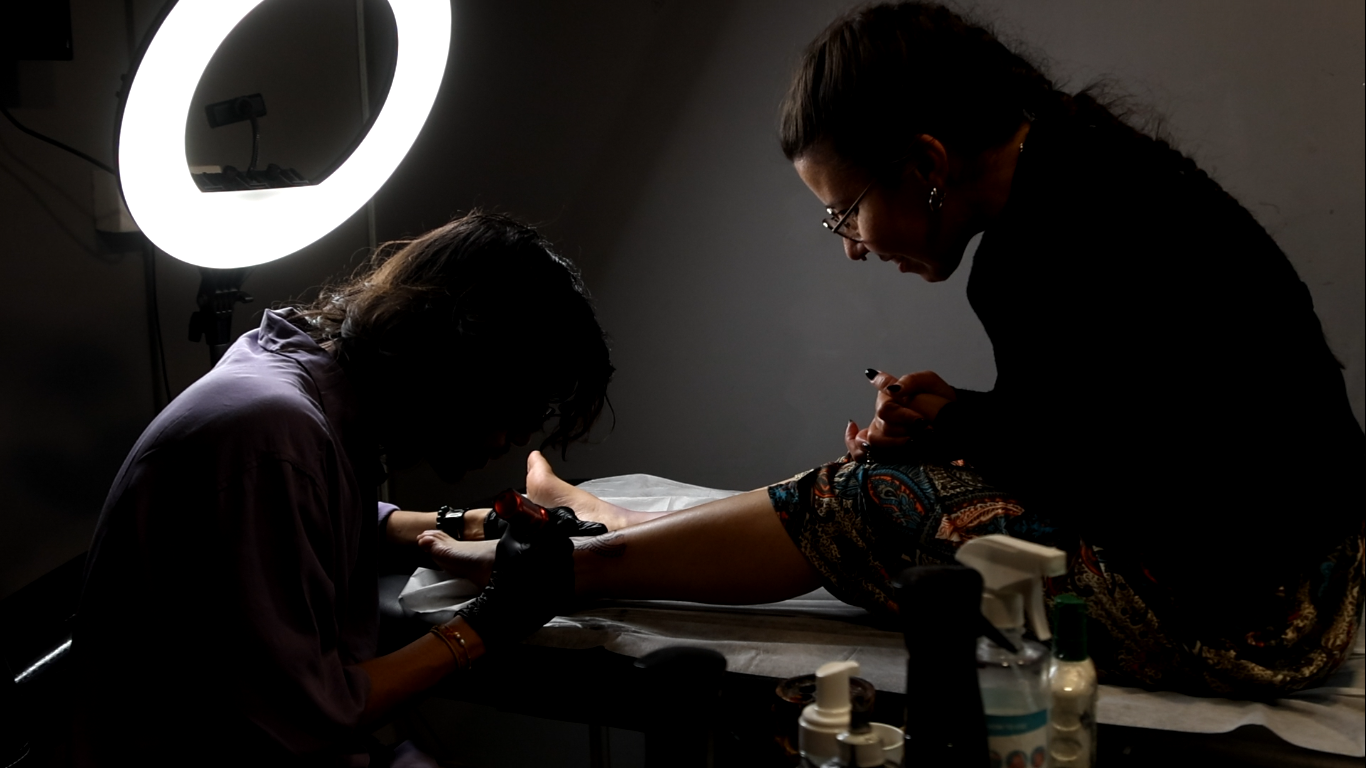
Before starting: The area is cleaned and shaved if needed. The design is placed as a stencil so you can confirm placement before anything is permanent.
During the tattoo: You’ll feel a consistent buzzing sensation—not constant sharp pain, but a steady discomfort that varies depending on placement. Areas with more bone or thinner skin (ribs, ankles, spine) tend to feel more intense than fleshier areas (outer arm, calf, thigh).
After the tattoo: The area is cleaned again, a thin layer of ointment is applied, and it’s covered for protection on your way home.
👉 Most people describe the pain as “manageable, not unbearable.” It’s rarely as bad as people imagine.
Does Getting a Tattoo Hurt? (An Honest Answer)
Yes—but not in the way most beginners fear.
Pain levels depend on:
- Placement – Bony or thin-skin areas hurt more
- Size and detail – Longer sessions mean more cumulative discomfort
- Your personal pain tolerance – This varies a lot, person to person
A general (very rough) guide:
| Lower Pain Areas | Higher Pain Areas |
| Outer forearm | Ribs |
| Calf | Spine |
| Shoulder | Ankle/foot |
| Thigh | Inner elbow |
👉 If you’re nervous about pain, start with a smaller piece in a lower-sensitivity area. You can always go bigger next time.
What to Do Before Your Tattoo Appointment
A little preparation goes a long way.
- Eat a proper meal beforehand—never get tattooed on an empty stomach
- Stay hydrated in the days leading up
- Avoid alcohol the night before (it thins your blood and affects healing)
- Get a good night’s sleep
- Wear comfortable clothing that allows easy access to the tattoo area
👉 A well-prepared body handles the session—and heals afterward—much better.
What to Expect Right After: Healing Basics for First-Timers
Once the tattoo is done, the real work begins—and it’s mostly about doing less, not more.
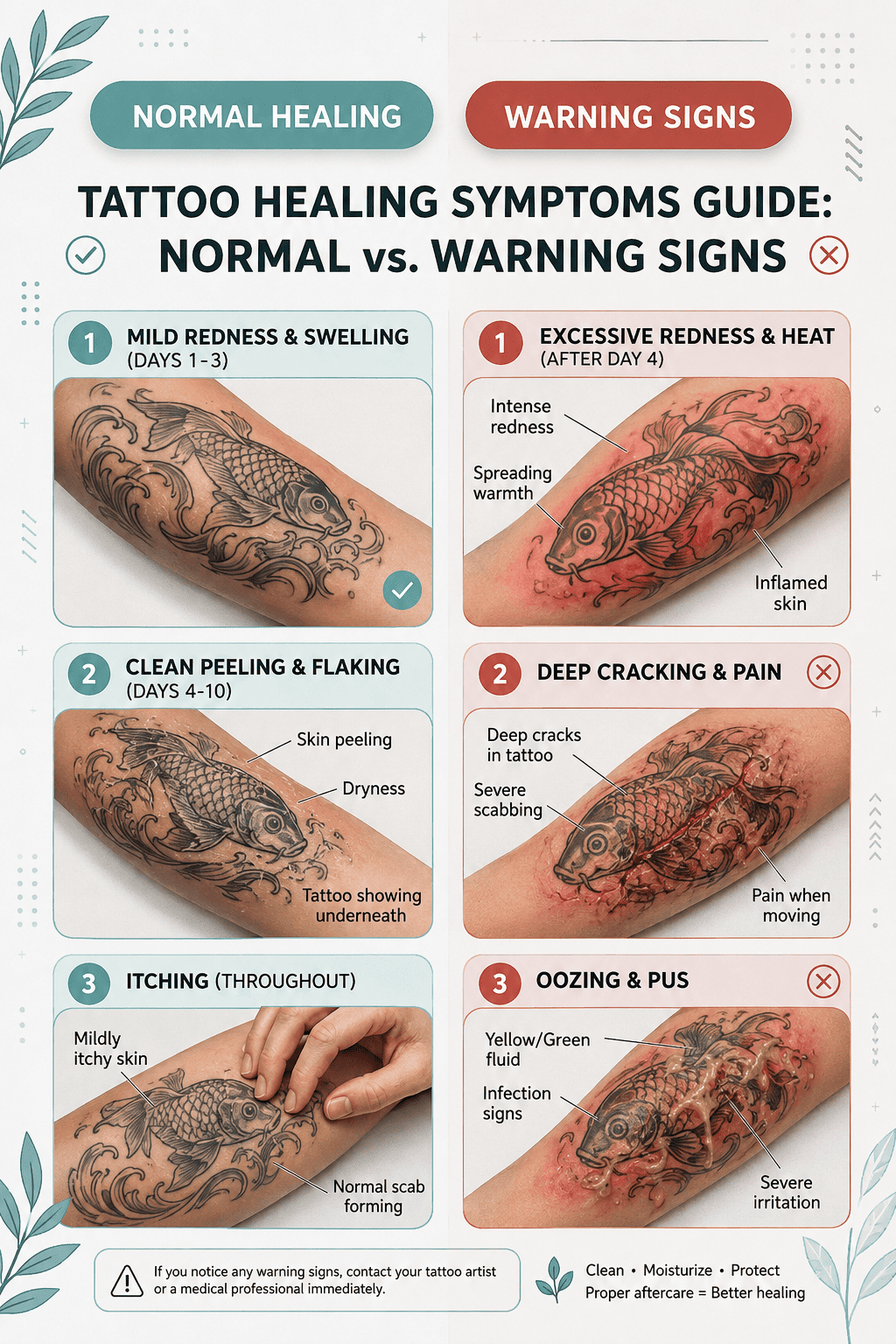
The first few days, expect mild redness, slight swelling, and dryness. This is completely normal and part of recovery, not a warning sign.
Basic aftercare guidelines:
- Wash gently with mild, fragrance-free soap
- Pat dry—never rub
- Apply a thin layer of recommended ointment
- Avoid swimming, direct sunlight, and tight clothing for the first couple of weeks
👉 When it comes to aftercare, consistency matters far more than doing anything extreme.
If you want a deeper breakdown of healing stages and warning signs to watch for, it’s worth reading up on tattoo infection prevention separately—but for a first tattoo, the short version is: keep it clean, leave it alone, and don’t rush the process.
Common First-Tattoo Mistakes to Avoid
Most regrets don’t come from the tattoo itself—they come from avoidable mistakes around it.
- Choosing a studio based on price alone
- Skipping the consultation
- Picking an overly complex design for a first tattoo
- Touching or scratching the healing area
- Returning to the gym or pool too early
- Using random creams instead of recommended products
👉 Almost every “bad tattoo experience” traces back to one of these.
How Long Does a First Tattoo Take to Heal?
Here’s a realistic timeline:
- Days 1–3: Redness, sensitivity, mild swelling
- Days 4–10: Peeling and itching begin
- Days 10–21: Surface healing completes
- Weeks 3–6: Deeper skin layers fully recover
👉 Even once it looks healed on the surface, your skin is still settling underneath. Patience pays off in how the final tattoo looks.
Why Your First Studio Choice Matters Long-Term
Your first tattoo experience shapes how you feel about every tattoo after it.
A good first experience—clean environment, clear communication, proper aftercare guidance—often turns into a lifelong relationship with that studio. A bad one can put people off tattoos entirely, even when the issue was the studio, not the art form itself.
How White Snakes Tattoo Studio Supports First-Timers
We know first tattoos come with extra questions, extra nerves, and extra care needed. That’s exactly why we build the process around you:
- A proper consultation before any ink touches skin
- Clear explanations of pain, placement, and aftercare
- Ongoing WhatsApp support through your healing journey
- A welcoming space where no question feels like a silly one
👉 Your first tattoo should feel exciting, not stressful. That’s the experience we aim to give every first-timer who walks through our door.
Final Thought
Your first tattoo doesn’t need to be perfect. It needs to be right—for you, your skin, and the studio you trust.
With the right design, the right studio, and a little patience through healing, your first tattoo becomes more than ink on skin.
It becomes a story you’ll always remember getting right.
FAQs
Does getting a tattoo hurt a lot for first-timers?
It’s uncomfortable but manageable for most people—rarely as painful as imagined. Pain varies based on placement and design size.
How do I choose my first tattoo design?
Pick something meaningful to you, but also practical—simpler designs tend to age better and heal more predictably for beginners.
Should I eat before getting a tattoo?
Yes. Always eat a proper meal beforehand and stay hydrated. Never get tattooed on an empty stomach.
How long does a first tattoo take to heal?
Surface healing takes about 2–3 weeks, with complete healing taking up to 6 weeks.
What size should my first tattoo be?
Smaller to medium-sized tattoos are generally recommended for first-timers, especially in lower-pain areas.
Can I bring a friend to my first tattoo appointment?
Most studios allow it, though it’s best to check beforehand, especially for longer sessions.
What should I avoid right after getting my first tattoo?
Avoid swimming, direct sunlight, tight clothing, and touching the area unnecessarily for at least 1–2 weeks.
How do I know if I picked a good tattoo studio?
Look for visible hygiene practices, a proper consultation process, and clear aftercare guidance—not just attractive pricing.
Is it normal to feel anxious before my first tattoo?
Completely normal. Most of that anxiety comes from not knowing what to expect, and usually fades once the session begins.
What’s the biggest mistake first-timers make?
Rushing the decision—skipping the consultation, choosing a studio on price alone, or picking an overly complex design too soon.